


- A Warehouse Management System helps businesses improve inventory control, warehouse visibility, order fulfillment, and overall supply chain efficiency through centralized and automated operations.
- Real-time inventory tracking, barcode scanning, RFID integration, and automated workflows reduce human errors while improving inventory accuracy and operational reliability.
- Warehouse Management Systems streamline receiving, storage, picking, packing, and shipping processes, enabling faster order processing and better customer satisfaction.
- Despite challenges such as implementation costs, system integration, employee training, and change management, the long-term benefits significantly outweigh the initial investment.
- Industries including retail, eCommerce, manufacturing, healthcare, food and beverage, and third-party logistics use WMS solutions to improve productivity, compliance, and warehouse performance.
- The future of Warehouse Management Systems is driven by AI, IoT, robotics, predictive analytics, and smart warehouse technologies that enable intelligent, data-driven, and highly automated operations.
In the logistics industry, there has been a turning point regarding the issue of labor shortages, rising expenses, and escalating demands for e-commerce. To combat the constraints of traditional storage facilities, firms need to master the art of strategic thinking, fast execution, and accuracy. One can safely say that all of these things would not have been possible without the help of warehouse management systems.
What is a Warehouse Management System Software?
A warehouse management system is a software that helps perform seamless business operations in terms of storage, stock management, inventory tracking, packing, and shipping.
The core purpose of a Warehouse Management System (WMS) is to have full control of the warehouse operations while improving customer satisfaction.
- Manages inventory accurately
- Organizes storage efficiently
- Speeds up warehouse operations
- Reduces costs and errors
- Improves order handling and customer satisfaction
How Warehouse Management System Works?
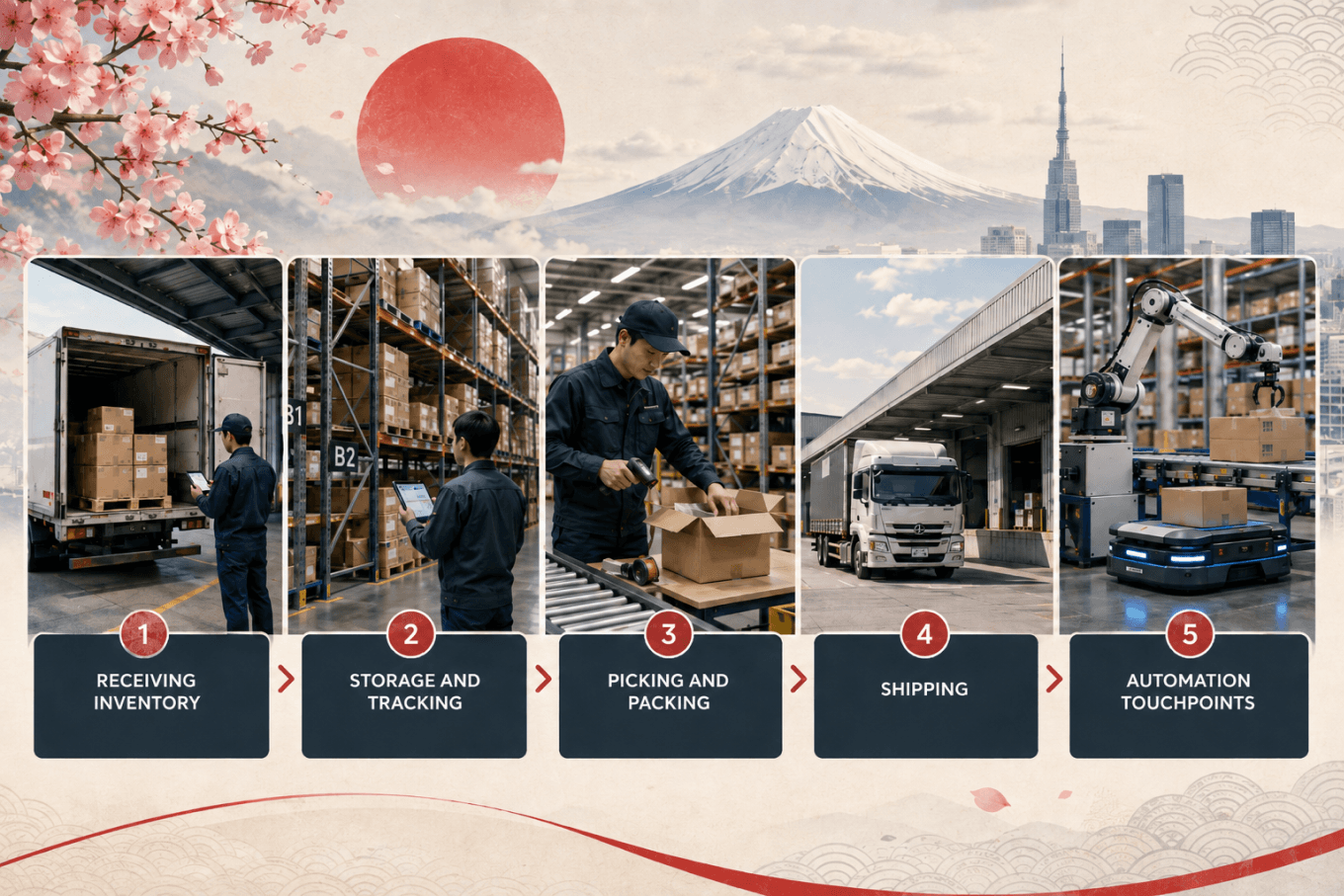
A Warehouse Management System (WMS) uses a systematic process with well-defined workflows to streamline the functions of a warehouse.
Receiving Inventory
When products arrive, they are scanned (using bar code or RFID) and entered into inventory records to keep track of the products and update them in the inventory tracking system.
Storage and Tracking
The WMS suggests where to store items based on what is available in the facility and what is being purchased. As the items are moved, updates are made to the inventory system across warehouse operations software.
Picking and Packing
When an order is placed for fulfillment, the WMS creates a list to use as a guide to direct the workers picking the products to the proper locations within the facility to collect the correct items and package them using optimal methods like hand-held devices and RFID technology.
Shipping
The WMS creates shipping labels, updates the quantity of inventory on-hand, and prepares to integrate the shipping activity with the transportation systems used for shipment.
Automation Touchpoints
The use of barcode scanning, RFID technology, automated sortation equipment, and robotic applications eliminates manual labor, reduces errors, and speeds up the pace of work within all aspects of the Warehouse Management System's Supply Chain Management (SCM) processes.
Want Better Control Over Warehouse Operations Today?
Improve inventory visibility, streamline workflows, and support faster order fulfillment with scalable warehouse management software solutions.
Challenges Involved in the Implementation of Warehouse Management Software
Initial Expense
Many businesses will have to make a substantial start-up investment in order to use WMS software, warehouse automation, robots and all related infrastructure; these require a significant capital investment for most small and mid-sized businesses.
Integration Complexity
If the legacy inventory tracking system or custom distribution management system does not include modern APIs or have APIs available for use with existing software, then implementing that software will require costly middleware which results in increased implementation risk.
Staff Training
Employees will need to become familiar with the new software for warehouse operations as well as update their familiarity with inventory management system interfaces and processes that will change as a result of the automation accomplished during the selection and implementation of the order picking / put-away.
Resistance to Change
Teams that are used to older inventory management software may be resistant to the utilization of newer order fulfillment and logistics management systems without being fully informed of the anticipated benefits associated with these systems, which include a reduced number of stockouts and improved shipping times, etc.
Top Benefits of Warehouse Management System Application
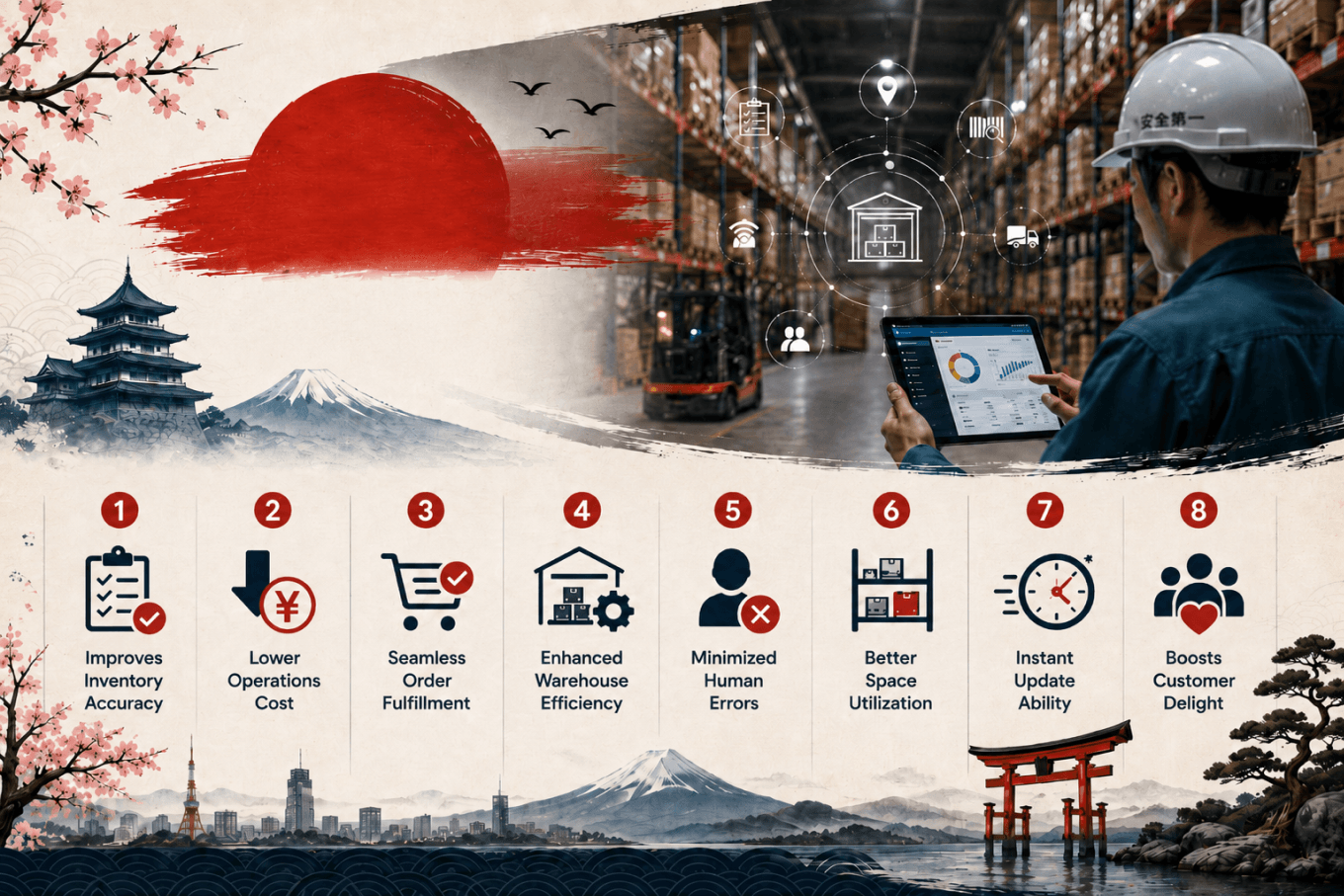
Delve deep into the remarkable benefits of the warehouse management system application that includes everything from increased labor productivity to real-time tracking and optimized storage space.
Improves Inventory Accuracy
Ongoing monitoring and automated updating greatly help in lessening discrepancies, and stock mismatches throughout the warehouse.
Lower Operations Cost
WMS puts the workforce in the most effective positions, and improves the use of available space, resulting in reduced overall operating costs.
Seamless Order Fulfillment
The entire picking, packing, and shipping processes is highly organized and simplified ensuring quicker turnaround times and scheduled order delivery.
Enhanced Warehouse Efficiency
The warehouse automation takes over repetitive duties and arranges optimized workflows, thereby leading to increased productivity and lesser bottlenecks.
Minimized Human Errors
Barcode scanning, RFID, and system validations are all techniques that can help to reduce manual entry errors and make the processes more dependable.
Better Space Utilization
With the help of smart slotting techniques and the development of storage strategies, warehouses can be able to make the most of the space they have available.
Instant Update Ability
Equip the management with live information of stocks, order progress, and warehouse activities so they can make well-informed decisions.
Boosts Customer Delight
Delivering accurate orders, implementing faster deliveries and elevating service levels will help to build stronger customer trust and retain them.
Planning To Upgrade Your Existing Warehouse Systems?
Learn how modern WMS platforms improve inventory accuracy, automation, and real-time coordination across warehouse operations efficiently.
Use Cases of Warehouse Management System Software Across Industries
Retail/Consumer Goods
Management of a dual-use warehouse (supporting both inventory for the store and e-commerce orders)
Real-time visibility of inventory to minimize out-of-stock conditions and provide an omnichannel experience (ex. BOPIS: buy online, pick up in store)
eCommerce/3PL
Managing a large number of small packages for shipping purposes using wave/batch picking, zone picking and integration with multiple parcel carrier service providers.
Multi-tenant visibility for each 3PL customer to view their inventory, rate cards and invoices for the same warehouse they are stored in.
Manufacturing
Managing the raw materials, work in progress and finished goods that are being manufactured and stored in a warehouse
Lot/serial traceability, quality hold and integration with an ERP/MES solution to tie production planning to material availability
Food and Beverage
Management of both shelf stable and perishable goods with expiration dates to allow for FIFO and FEFO inventory management
Temperature zone management (ambient, frozen and refrigerated) and fast identification of product recall's when necessary
Healthcare
Provides adherence to strict compliance for various medical devices and drugs.
Offers supports during quarantine workflows and reconciliation between central warehouses and hospitals.
Fashion and Textiles
Managing the seasonal nature of SKUs, colors, sizes and promotional events with proper reservation to ensure the sale of stocked items.
Providing support for markdown planning by analyzing inventory on aging and providing an away-from-the-shelf location for unsold merchandise – either to outlet stores or e-commerce.
Future of Warehouse Management Systems
The future of Warehouse Management Systems (WMS) will become intelligent with autonomous operations designed to utilize real-time AI-based decision making for optimizing amount of inventory placed, how much labor would be allocated to that inventory and where to distribute orders.
Prediction based analytics allows better anticipation of demand in advance of ordering products; reduce stock outs; and help create more effective supply chains.
The warehouse will eventually become a Smart Warehouse using continuous visibility and control within the warehouse via IoT sensor devices. Automation in the form of autonomous mobile robots and automated picking systems; will add speed and accuracy to the existing workflows.
As technology continues to advance so will the WMS, changing from just an operational tool to a strategic tool that can deliver a better, more efficient service to all areas of a company's supply chain by removing waste and providing insights based on data.
Looking To Improve Order Fulfillment and Accuracy?
Enable faster picking, packing, and shipping processes while creating more organized and efficient warehouse management workflows today.
Bottom Line!
Warehouse management systems are an essential element of contemporary inventory management systems and supply chain management software, as they provide firms with the ability to improve warehouse inventory control, order fulfillment systems, and logistics management systems as a whole. Although there are some difficulties like high prices, complexities in the process of integration, and employees' adaptation processes, their benefits in the long run are much higher than the mentioned obstacles.
With the warehouse automation systems, inventory tracking systems, and warehouse management operations software, companies can experience greater efficiency, precision, and scalability. With the progress made in the future of warehouse management systems with AI and prediction technology, firms that make the right decision about warehouse management system software can enjoy many advantages and opportunities in the future.
Frequently Asked Questions
1. What is a Warehouse Management System?
A Warehouse Management System (WMS) is software that helps businesses manage inventory, storage, packing, and shipping operations more efficiently.
2. Why do businesses need a Warehouse Management System?
A Warehouse Management System improves inventory accuracy, reduces errors, speeds up order fulfillment, and helps businesses lower operational costs.
3. Which industries use Warehouse Management Systems?
Industries like retail, eCommerce, manufacturing, healthcare, and food & beverage use Warehouse Management Systems to improve warehouse and supply chain operations.
4. How does a Warehouse Management System reduce costs?
A Warehouse Management System automates warehouse tasks, improves storage usage, and reduces manual work, helping businesses save time and operational expenses.
5. What are the latest trends in Warehouse Management Systems?
Modern Warehouse Management Systems use AI, IoT, RFID, and robotics to improve real-time tracking, automation, and warehouse efficiency.
6. Can small businesses use a Warehouse Management System?
Yes. Cloud-based Warehouse Management Systems are affordable and help small businesses manage inventory, orders, and warehouse operations more effectively.